Double Board-Certified, Harvard-Trained · 141 Documented Before-and-After Cases · 4.9 Average  ·  314 Reviews

Where cheek volume actually comes from

The visual "high cheekbone" look comes from the zygomatic bone itself, but the fuller, softer contour beneath it comes from a separate area entirely.

Malar Region

The malar area sits directly over the zygomatic (cheek) bone — augmenting it enhances the actual high point of the cheekbone, for a more sculpted, angular look.

Submalar Region

The submalar space sits just below the cheekbone, where soft tissue naturally fills the face. Volume loss here creates a gaunt, hollowed look distinct from cheekbone flatness — and calls for a different implant placement.

Combined Placement

Many patients need volume restored in both the malar and submalar areas together. Dr. Kim assesses each patient's specific pattern of flatness or hollowing to determine the right implant type and placement.

Which category actually applies to you?

Flat or hollow cheeks come from one of two root causes — lost soft tissue volume, or cheekbones that were never very prominent to begin with — and the right fix depends on which one you have.

A simple way to self-check: has your cheek flatness changed over time, or has it always looked this way — even in old photos from your 20s and 30s? A hollowed look that's new or has worsened with age usually points to soft-tissue volume loss. Cheeks that have always sat relatively flat, regardless of age, usually point to the underlying bone structure itself — a naturally underdeveloped or hypoplastic cheekbone (zygomatic/malar bone).

  • Injectable filler — a temporary, reversible way to add soft-tissue volume, well suited to mild volume loss or patients who want to preview a change before committing further. See our injectable cheek volume page.
  • Fat transfer — restores lost soft-tissue volume using your own fat, for a more moderate-to-significant, longer-lasting (though still not permanent-structural) correction. See our facial fat transfer page.
  • Cheek implant — addresses the bony structure itself, for patients whose cheekbone projection is naturally limited or underdeveloped, not just their soft tissue.

Bone vs. soft tissue — why the distinction matters

Filler and fat grafting both restore volume in the soft tissue layered over the cheekbone — they make a flat area look fuller, but they don't change the shape of the bone underneath. A cheek implant, by contrast, sits directly against the zygomatic bone and restores the skeletal framework itself, giving the face genuine structural projection rather than just added padding. For patients whose flatness is primarily a bone-structure issue, filler or fat alone will improve fullness but won't fully create the more sculpted, defined cheekbone they're picturing — which is why implants exist as a distinct option, not simply a "bigger" version of filler.

These options are also frequently combined: an implant can restore the underlying bony framework, while fat grafting refines the soft-tissue drape over it — complementary layers rather than competing choices. Dr. Kim will help you identify which category (or combination) actually matches your anatomy at consultation.

Implant material, incision, and technique

Cheek implants may be made of solid silicone or polyethylene, chosen based on your anatomy and goals. Dr. Kim typically places the implant through an incision inside the mouth (intraoral), positioning it against the cheekbone or overlying soft tissue before closing the incision — leaving no visible external scar. When cheek augmentation is combined with a facelift or eyelid surgery, the implant can sometimes be placed through the same incision used for that procedure instead.

A note on sensation

Because the cheek implant sits near the infraorbital nerve, some temporary numbness or altered sensation in the cheek and upper lip area is common after surgery and typically resolves as healing progresses. Dr. Kim will discuss what to expect for your specific anatomy at consultation.

What's involved: incision most commonly placed inside the mouth  ·  solid silicone or polyethylene implant, sized and shaped for the individual patient  ·  malar, submalar, or combined placement depending on your pattern of volume loss  ·  can be combined with facelift or blepharoplasty in the same surgery.

What recovery actually looks like

There's an on-call physician during off-hours, and every surgical patient has direct access to the surgeon's personal cell phone for surgery-related questions.

Week 1–2

Expect tightness, swelling, and bruising for about 1–2 weeks following surgery. If the incision is intraoral, you'll follow a soft-food diet and oral hygiene protocol during initial healing.

7–10 Days

Strenuous activity that strains the facial muscles — such as weight training — should be avoided for at least 7 to 10 days after surgery.

Two Months

Total healing typically takes about two months as swelling fully resolves and tissue settles around the implant, but the resulting contour improvement lasts for many years.

Manhattan & Rochester Patients — Recovery Program

As with any surgical procedure, cheek implant surgery carries standard surgical risks, which Dr. Kim reviews individually with every patient during consultation, including the possibility of implant displacement requiring revision.

Cheek Implants FAQs

Will cheek implants look and feel natural once healed?

Yes. Dr. Kim carefully selects the implant material, size, and shape to match your anatomy and aesthetic goals. As swelling subsides and surrounding tissue adjusts around the implant, most patients find the results both natural-looking and long-lasting.

Can cheek implants shift or move out of place over time?

Cheek implants are typically stable long-term once healed. Following all postoperative care instructions is key to reducing the risk of movement during the healing period — avoiding activities that strain the facial muscles, like weightlifting or sleeping on your face, helps protect the implant while it settles into position.

How do I know if I need filler, fat transfer, or an implant?

It comes down to whether your flatness is a soft-tissue or a bone-structure issue. If your cheeks have hollowed or lost fullness over time, filler or fat transfer — which restore soft-tissue volume — are usually the better starting point. If your cheekbones have always sat relatively flat, even when you were younger, the underlying bone itself is likely underdeveloped, and an implant is the option that actually addresses that structural cause. Dr. Kim will help you determine which applies to you at consultation, and some patients benefit from combining an implant with fat grafting for both structure and soft-tissue refinement.

Can implants be removed or revised later?

Yes — if your goals or facial structure change over time, implants can be removed, exchanged, or repositioned. This is a conversation Dr. Kim can walk you through at consultation.

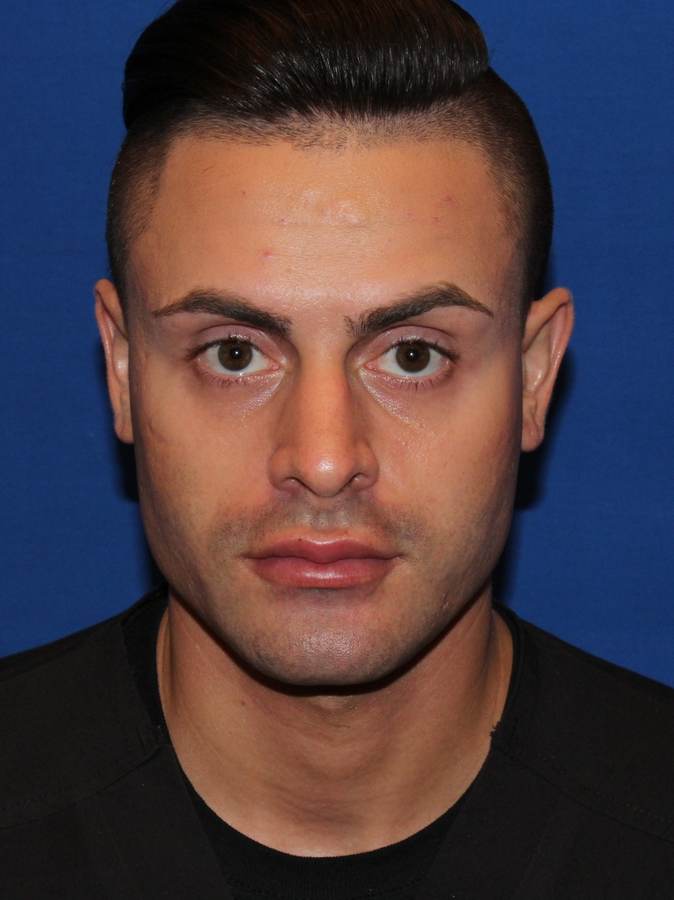
Actual patients of Dr. Kim

Shown with patient consent. Individual results vary by anatomy, technique, and healing.

Cheek Implant patient before, front view Cheek Implant patient after, front view
Case 1Before (left) & after (right) — front view
Cheek Implant patient before, front view Cheek Implant patient after, front view
Case 2Before (left) & after (right) — front view
Cheek Implant patient before, front view Cheek Implant patient after, front view
Case 3Before (left) & after (right) — front view

View More Cheek Implant Results in the Full Gallery →

In their own words

★★★★★

"I would highly recommend Dr. Sang Kim. He is very knowledgeable and wants his patients to look as natural as possible. Never felt rushed by him or his staff. I had cheek implants & lower blepharoplasty — there was an improvement."

M. — Healthgrades
★★★★★

"Dr. Kim gave me a mini-lift, cheek implants and upper blepharoplasty. I'm very pleased with the results. My midface and lower face have been smoothed and lifted, yet very natural."

D. — RealSelf
★★★★★

"My mid-face and lower face have been smoothed and lifted, yet very natural. Dr. Kim's staff was attentive, professional and thorough. Highly recommend."

M.W. — Google
4.9 average rating  ·  314 reviews
Featured In
AllureMarie ClaireChicago TribuneDaily MailGood HousekeepingWCNY (PBS)NewsChannel 9 WSYR (ABC)