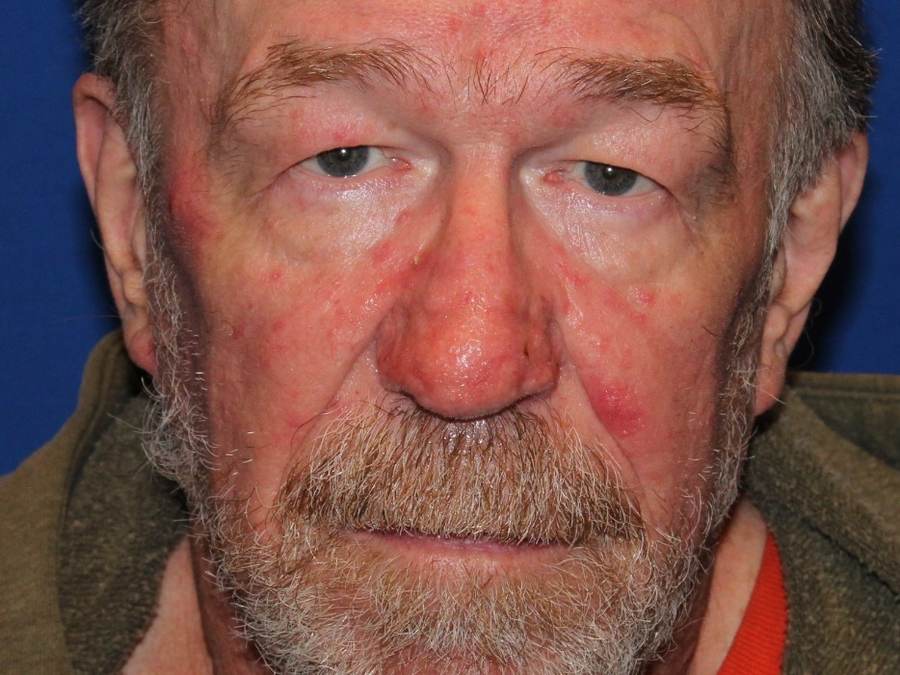
A progressive condition — treated early makes a real difference.
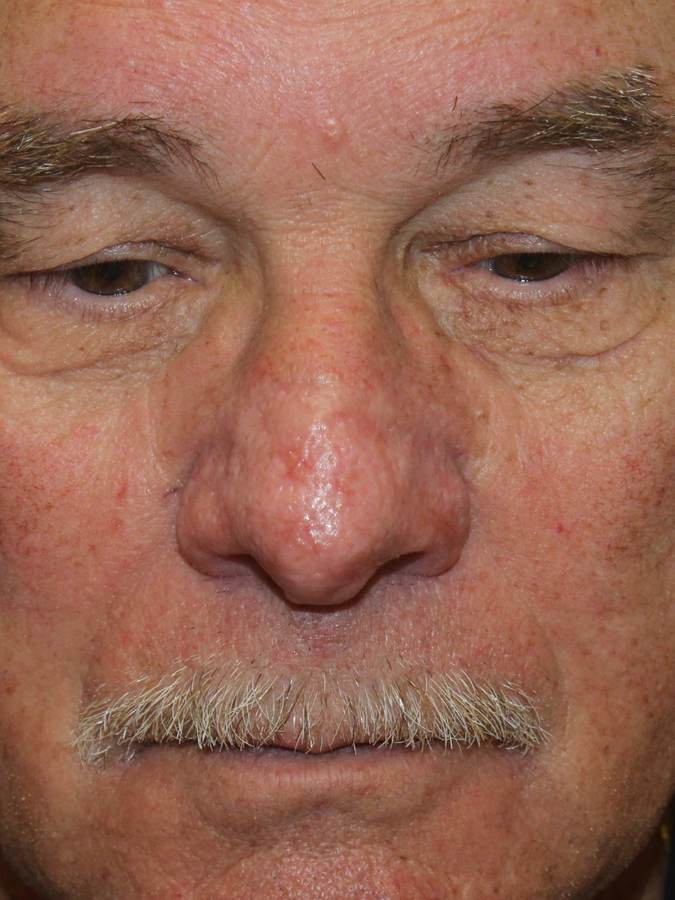
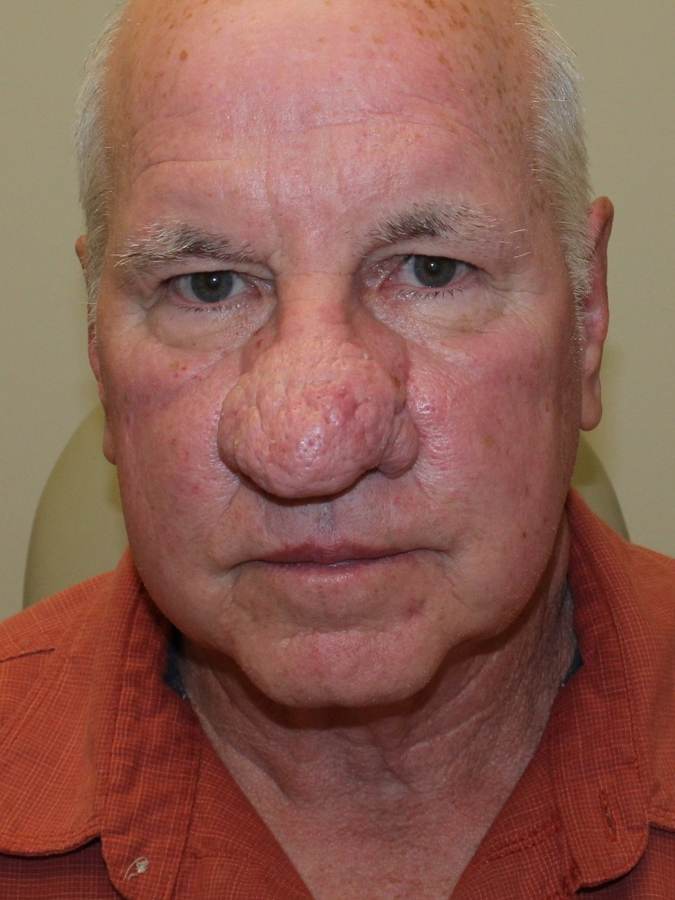
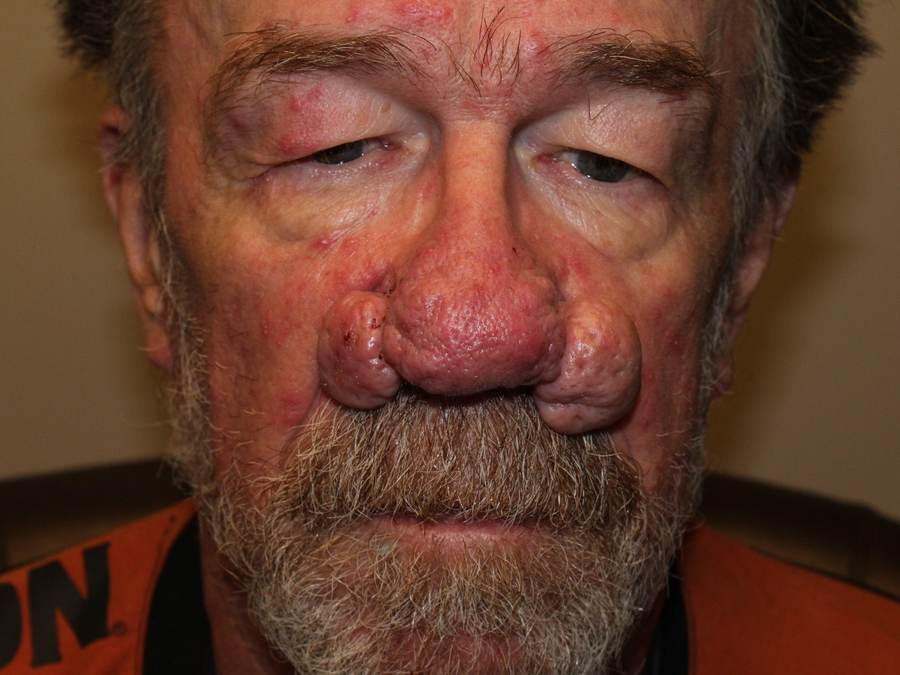
Rhinophyma is a deformity of the nose in which the skin becomes red, thickened, and irregularly bumpy — a late-stage form of rosacea that, left untreated, tends to progress rather than plateau. Dr. Kim offers both medical management for earlier stages and surgical correction for advanced cases, tailored to how far the condition has progressed.
Rhinophyma begins as rosacea — chronic inflammation of the skin that causes redness from vascular dilation and formation. It carries hereditary components, and social/environmental risk factors including frequent alcohol use, caffeine, and ultraviolet light exposure are associated with progression, though alcohol use alone does not cause rhinophyma — a common misconception. There also appears to be an association with a skin mite, Demodex folliculorum, which favors the oil glands of hypervascular skin and can drive further inflammation and scarring of nasal tissue over time.
Rhinophyma is diagnosed clinically, based on its characteristic appearance of redness, visible surface vessels, and skin thickening, though a biopsy is occasionally used to confirm the diagnosis or rule out other conditions in cases that don't respond as expected to initial treatment.
The condition is most common in men between roughly 50 and 70, particularly those with fair skin and Northern European or Celtic ancestry, and a family history of rosacea. Left untreated, rhinophyma does not resolve on its own — it's a progressive condition that typically worsens over time, leading to more pronounced thickening and shape change, and, once it reaches sufficient size, can begin to affect nasal airway breathing function as well.
Mild, earlier-stage rhinophyma is often manageable with medication alone, so there's no need to wait until the condition is advanced to be evaluated — in fact, earlier evaluation is what keeps medical management a realistic option for longer, rather than surgery becoming the only path forward.
Initial management of milder rhinophyma involves medication, including antibiotics, metronidazole, and oral isotretinoin — the latter prescribed by a doctor and monitored closely given its significant side-effect profile. These options can meaningfully slow or manage early-stage disease, but they don't reverse tissue that has already thickened significantly.
Advanced rhinophyma requires surgical treatment to remove the excess tissue. Several techniques exist — including CO2 or Erbium laser ablation, electrosurgery, dermabrasion, and cold-steel excision — and in most advanced cases, direct surgical removal of the thickened skin is the most effective method. Treatment is typically done under sedation rather than general anesthesia, with the procedure itself generally taking between thirty minutes and two hours depending on severity; more extensive cases occasionally benefit from a second, staged procedure to reach the best final result.
Immediately after surgical treatment, the nose will appear raw and exposed, with a tendency to bleed and crust for roughly the first eight to ten days. Meticulous wound care — copious ointment coverage while new skin develops — is important during this window to reduce the risk of infection or scarring. Most patients don't report significant pain, but plan to stay largely indoors during this early period while caring for the wound site.
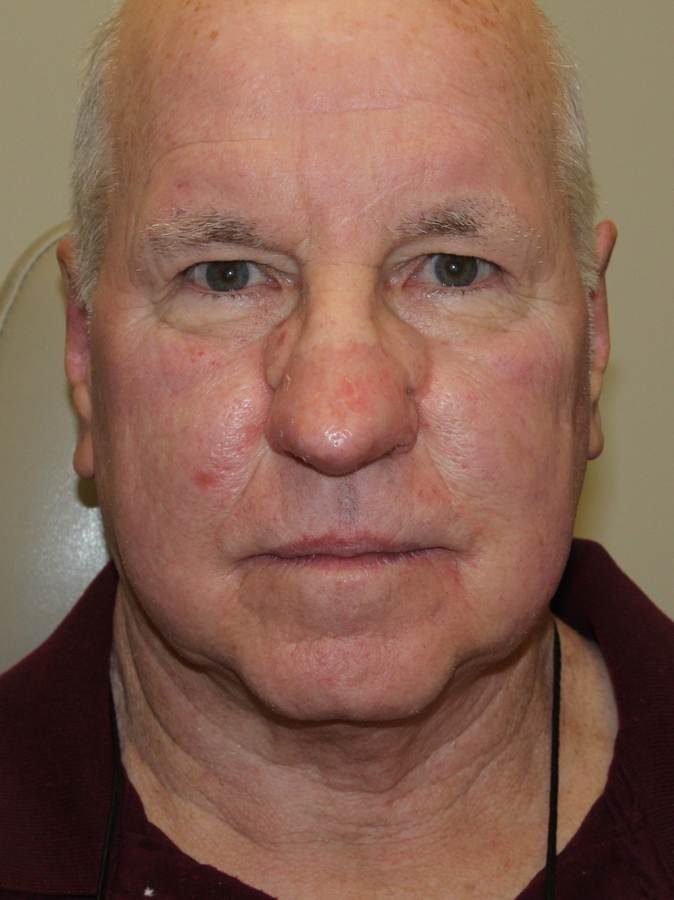
Redness typically continues to fade over the following two to three weeks, with the final result — smoother, more proportionate nasal skin — continuing to develop over two to three months as healing completes. Occasionally, additional treatment is recommended after sufficient recovery to further refine the outcome, which may involve another round of surgical excision, dermabrasion, or laser resurfacing.
No — this is a persistent myth. Rhinophyma is a form of rosacea with hereditary, vascular, and possibly microbial (Demodex mite) contributing factors. Alcohol use is associated with flushing that can aggravate rosacea symptoms, but it does not cause rhinophyma on its own, and plenty of patients with rhinophyma don't drink at all.
Unfortunately, no. It's a progressive condition that typically worsens if left untreated. Early intervention with medical management may slow progression, but once significant tissue overgrowth has occurred, surgical treatment is usually needed to restore a more natural appearance and, if the airway is affected, improve breathing.
Most patients experience mild to moderate discomfort that's manageable with prescribed medication if needed. Swelling, redness, and crusting are common during the first week or two as the skin heals, with final results developing over the following several weeks to a few months.
In many cases, yes. When tissue overgrowth becomes severe enough to narrow or block the nasal passages, removing the excess tissue and reshaping the nose can restore appearance and open the airway, improving airflow along with the way the nose looks.
It depends on the specifics of your case — when rhinophyma is affecting nasal airway function, treatment may be considered medically necessary rather than purely cosmetic. Our team can help you understand what's likely to apply to your situation.
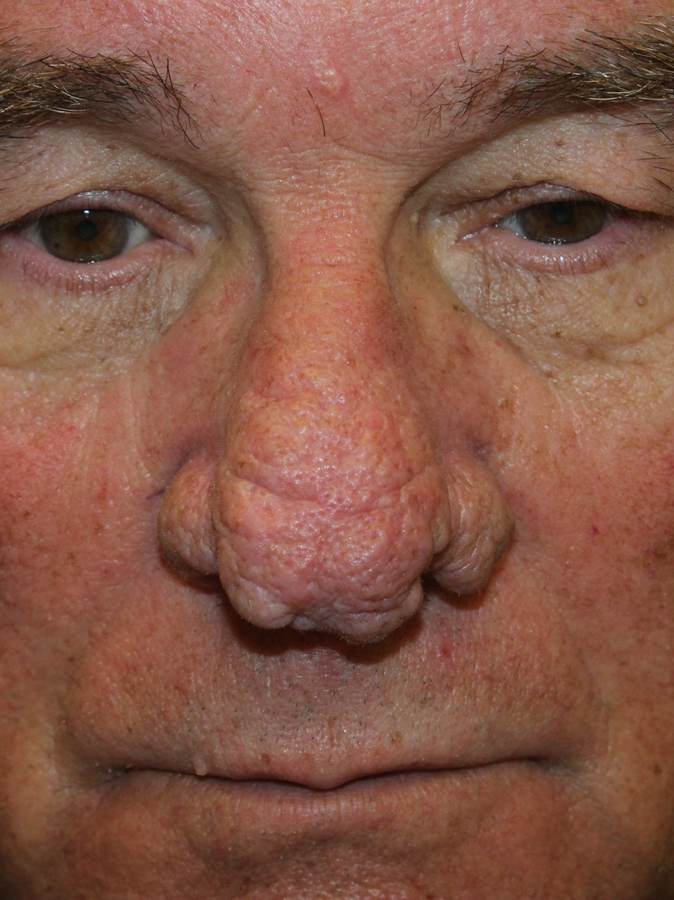
Shown with patient consent. Individual results vary by anatomy, technique, and healing.
"I had a dog bite to my face and Dr. Kim repaired my face and you can hardly see my scars!!"
"He's a Harvard trained surgeon and an expert in his craft, but he is quiet humble and down to earth... when you go to him for cosmetics, please trust his vision. He's as much a surgeon as he is an artist."
"I still have scars from other surgeons who used untrained interns. Dr. Kim did the surgery himself — that's what I liked about him."